EF: LeWitt believed that once an artwork is “out there” it is out of the artist’s control. It awaits the viewer’s input. You seem to have sensed the role of the viewer in art early on in your life. What does that mean to you today?
WHK: I often speak about the fact that, as a viewer looking at a particular image, you are not bound by the intent of the artist. You can bring to it what you wish. As I got more and more interested in abstraction, and in particular in geometric abstraction, that awareness became very important to me. One of the things about close looking is that it provides a moment of serenity. Not an intellectual serenity, but a physical serenity.
EF: Did minimal and conceptual art offer a rubric or a way of structuring what you seem to have sensed intuitively?
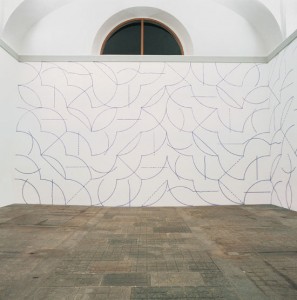 WHK: Yes, absolutely. And it was really, in large part, because of looking very early on at LeWitt’s work that I decided that future acquisitions would be more related to that kind of work, particularly to abstraction and geometric abstraction. That didn’t always hold true because there were many things that I acquired that don’t fit that rubric, but the bulk of it has.
EF: So you made a connection between LeWitt’s work and the first drawings that interested you?
WHK: Exactly. It might be hard to understand it today, but back then Sol’s work was anti-monumental, and the early European works that I like are small, slight, Northern European drawings. If I were to start collecting today, I’d try to collect Dürer drawings. Although there is visual narrative there, those drawings also give you ample opportunity to bring to them what you will.
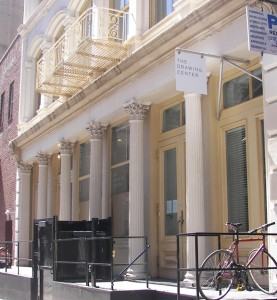 EF: I am interested in the period during which you decided to focus your collecting on minimal and abstract drawings—works made by LeWitt and other artists who came of age in the sixties and seventies. Those artists made drawing central to what they were doing, even though drawing, as a support or preparatory medium, was considered marginal at that time. Drawing became newly interesting to artists precisely because, as you have said, it was “anti-monumental.” One of the first institutions to recognize the new significance of drawing was The Drawing Center, which was founded in 1977. Weren’t you a founding board member?
WHK: That wasn’t until later, but I was certainly involved in the seventies.
EF: So prior to the establishment of The Drawing Center, were you aware of the new interest among artists in drawing?
WHK: I don’t remember whether I was aware of a resurgent interest in drawing, but I knew drawing was important to me. Of course the founder of The Drawing Center, Martha Beck, was aware of how contemporary artists were using drawing and of the significance of drawing in general. The larger public recognition of drawing didn’t come until considerably later. When you start talking about an art public, you have to think about the fact that it is a tiny minority, and within that minority, if you find a trend, maybe only three or four people created it! Around the time I began collecting, most of the art community still did not distinguish between drawing and sketching. You had to create a work on canvas or a sculpture in order to be able to call it art with a capital A. And that, I think, has radically changed.
EF: What do you see as the trajectory of that change? The founding of a place like The Drawing Center was important, but how did we get to where we are today? Drawings are now accepted to such a degree that emerging artists whose practice is primarily on paper don’t need to think twice about that choice.
WHK: Most of them don’t know the history of it. The whole art world has become bigger. There are more people who are looking at art. If you think back to the fifties and sixties auctions at what was then Parke-Bernet, and at Sotheby’s and Christie’s, there would be fifty or sixty people there, and one pretty well knew most of them! That was true of the Impressionist and the Old Master auctions, and there were no contemporary auctions then. So you had a much smaller group of patrons. But in the late seventies or early eighties, it suddenly expanded. Museums realized that they needed to bring in younger people. Tom Hoving [the director of the Metropolitan Museum credited with establishing blockbuster exhibitions] had a huge influence on that. He made museum going popular, and as a part of that, more people were able to see different things, different aspects of art. Children used to be taken to museums to see Egyptian art or arms and armor, because that was very exciting to a lot of people, and maybe they went to the Old Master galleries. But as museum going became more respectable, people saw a wider range of things. Seeing more things in general may have had something to do with seeing more drawings and prints in particular, because they were always there.
Also, many of the artists who became known in the sixties and seventies talked about their drawings. And a lot of their work had a lot of drawing in it. If someone talked about LeWitt, they talked about wall drawings. It became part of the conversation, which it hadn’t been before. Drawings were associated with specialists and were less expensive and therefore more collectible. I’m sure there are half a dozen economists who will explain this to you, but I felt it. Suddenly people stopped saying, “That’s a sketch,” and instead said, “That’s a drawing.”