 SPLIT INFINITY
Body double
Power grid
Linear perspective
Time interval
Two-dimensional
Split decision
Multiple positioning
Tumbling dice
Local color
Sempiternal truth
Look closer…
SPLIT INFINITY
Body double
Power grid
Linear perspective
Time interval
Two-dimensional
Split decision
Multiple positioning
Tumbling dice
Local color
Sempiternal truth
Look closer…

The first thing we learn about this drawing from the information provided by the artist is that it is a work of small dimensions. Its title, Without Title, offers no additional information. But then the words [Carbon Removal] indicate that carbon is at least one of the materials involved in the making of this drawing and that, instead of being added on, it was removed.
Read more…
 The feet in this drawing are expressive–the kind of expression more normally seen in hands. They reveal the articulation of hard work; they are the feet of Trisha Brown, a revolutionary choreographer. When asked to write about this drawing, I was told that it was made with the artist’s foot. Perhaps the halting signature serves as a clue.
Read more…

River Rock and Smoke, 4/13/90, #12 is one in a series of sixty-one unique works, which John Cage produced with Ray Kass at Mountain Lake Workshop in Virginia in 1990. Each drawing was created using a combination of innovative printing and watercolor techniques. The first step in making each image was the embedding of the paper with smoke. In the case of this drawing, a small straw fire was set on a printing plate and then was extinguished when the dampened sheet of paper was held over the plate. The paper trapped and was imbued with smoke from the fire, which left the bronze-colored pattern of smoldering embers we now see on two-thirds of the paper’s surface. Cage then used watercolor to trace the perimeter of a stone that he had placed along the bottom edge of the work. The position of the stone was determined using the I-Ching, an ancient Chinese system of divination that was critical to Cage’s practice, and this reflects his ongoing concern with chance operations. Using chance to resolve the composition of the work allowed Cage to mitigate the authorial gesture of the paintbrush, to which he was generally resistant.
Read more…
 In this small drawing, a pigmented square is barely visible within the margin of the cotton paper; overlapping this square is yet another, stitched with black thread. All of this is offset by a large bright red contour in the shape of a clover. This drawing, made in 1994, calls to mind many of Chu’s preoccupations: the yarn and embroidered fabric that have been part of her vocabulary for years and the bright colors she has used in her figurative sculptures, glazed ceramics, paintings, and watercolors. The drawing attracts and holds my attention not only because of the thoughtfully placed objects and their starkly contrasting colors, but also because of the visual meanings these elements invoke.
Look closer…

Timeless
Intricate designs unfold
One after the next
A mystical narrative
Elusive
Inspiring wonder
The mystery lies in front of you
Drawing you in
To crack the code
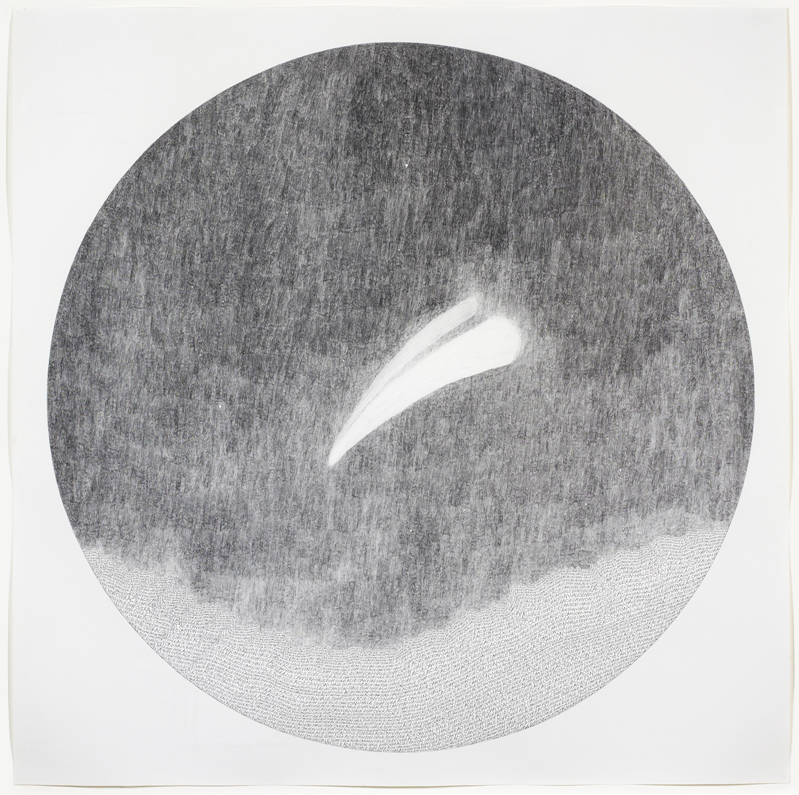
First, it is good to see a large round drawing–something I don’t see often. I like the idea of a large overall area of dense dark ink strokes coming down from the top and then separating so that the surface below is increasingly lighter.
Read more…

In Letter to Wynn Kramarsky, Elena del Rivero entices the viewer — or reader, depending on one’s reference point — to look deeper into this painted-over letter. It is a mystery that will never be revealed, not even to the person for whom it was written.
Read more…
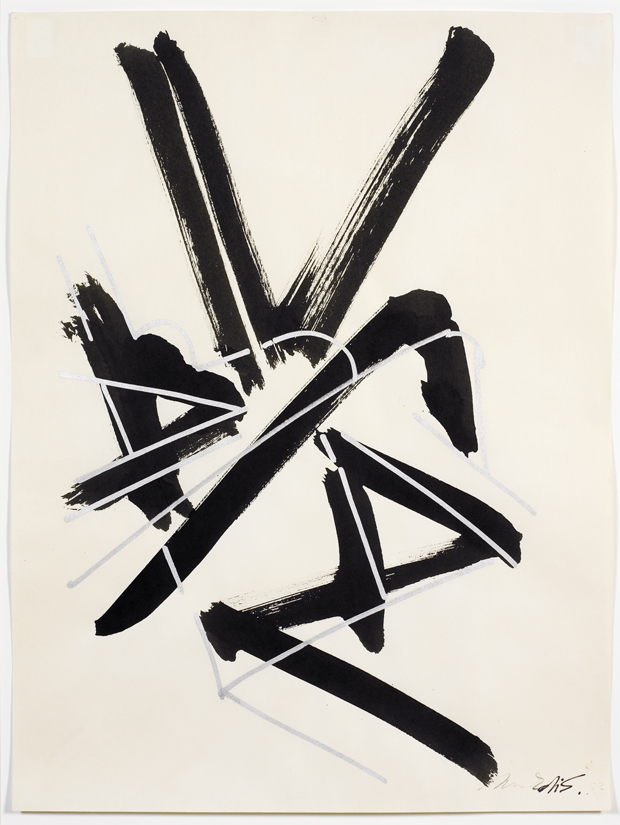
Space. Gravity. Sound. Sight.
To draw the fields that allow form to be perceived in a work of art compels imagining them first. Not to imagine: form. But, to imagine what form may require: imagining space; imagining gravity; imagining sound; imagining sight.
Read more…
